
FOLITEC develops and manufactures measurement and testing systems for industrial applications—with a focus on consistent measurement results, high-quality construction, and turnkey integration. For web materials, films, and technical materials—anywhere where quality must be tested consistently.
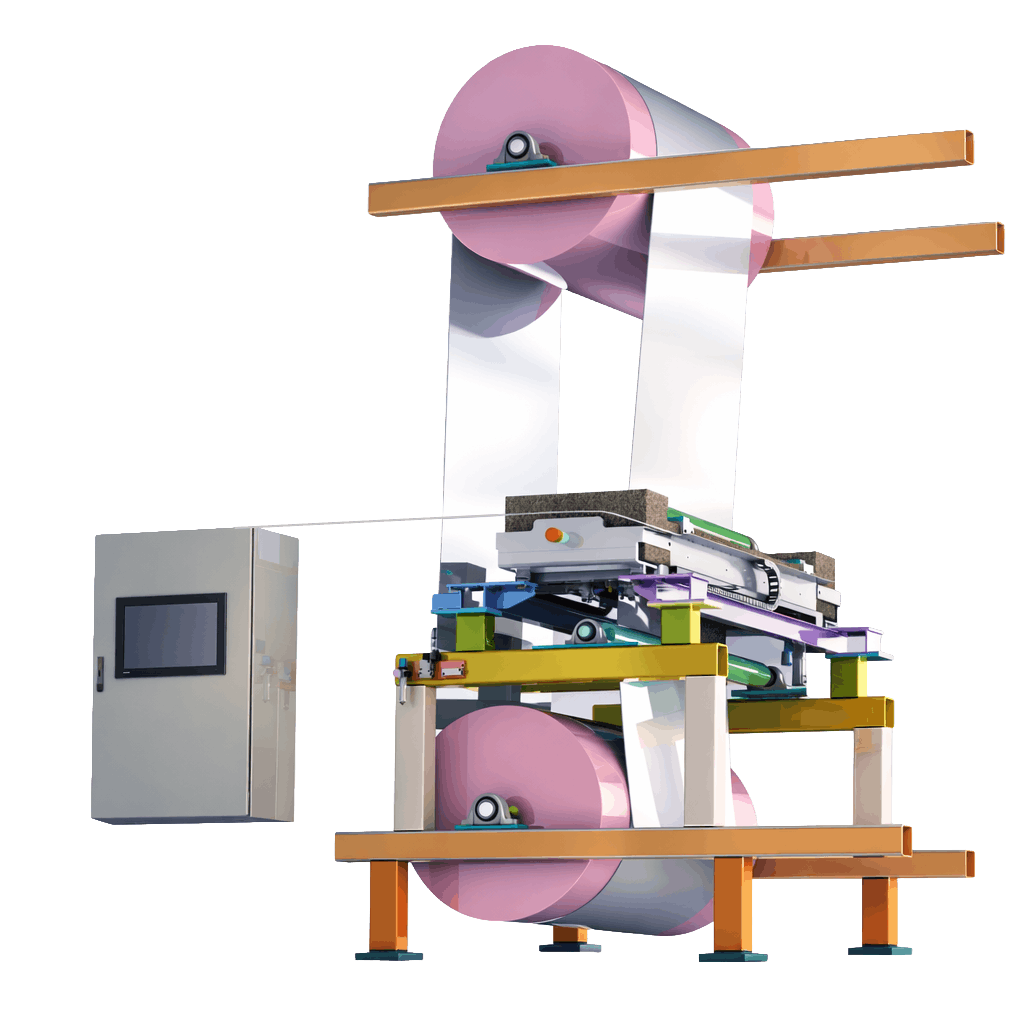
Since 1992, FOLITEC has been developing and manufacturing custom measurement, control, and testing systems for industrial processes. As an engineering team of highly qualified experts, we deliver system solutions that perform reliably where it counts: in day-to-day production. Our systems are not built from a modular kit, but rather from specific process requirements. The goal is a system that delivers precise measurement results, is designed to be low-vibration, and runs stably over many years in long-term operation.

The measurement principle and design are tailored to the material, process, and installation conditions.
From interfaces to commissioning: the system integrates seamlessly into your production line. (PLC/S7, OPC UA depending on the system)
At the heart of our work lies application-specific design. Material properties, measurement range, process conditions, and installation environment determine which measurement principle and mechanical design are most appropriate. That is precisely why we develop the appropriate system architecture instead of “bending” a standard solution to fit. This results in measurement and testing systems that stabilize processes, make quality measurable, and deliver reproducible results—in manufacturing as well as in demanding environments.
FOLITEC combines precision engineering with modern measurement technology, high-quality sensors, and—where necessary—automation and software. From the initial analysis through design and prototyping to turnkey delivery, we provide solutions that integrate seamlessly into your production line and function reliably in everyday production. Throughout the process, we consistently keep timeframes, budgets, and the agreed-upon goals firmly in mind.
If standard solutions do not provide sufficiently stable measurements or if your process requires more than a standalone solution, FOLITEC is the right partner for you. Contact us – we will evaluate your application and develop the right measurement, control, or testing system for your production.
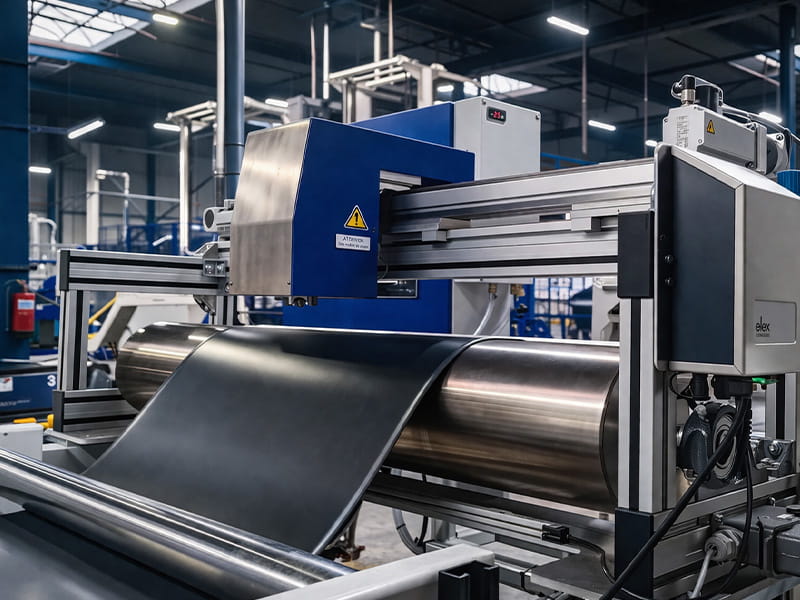
Thickness measurement, process monitoring, and consistent quality throughout the production line.
Wall thickness and shape inspection, process monitoring, automatic evaluation.
Functional testing, identification, sorting by tolerance class.
Inspect sensitive assemblies: alignment, housing, components, forces.
Precision, documentation, and 100% inspection concepts – implemented with process reliability.
Monitoring and Documentation: Audits, Codes, Attendance, Inline Data Entry.
Seat, Seal, Presence – Robust automated testing in sync with the production line.
Pre-assembled measurement and testing modules as subsystems for your systems.
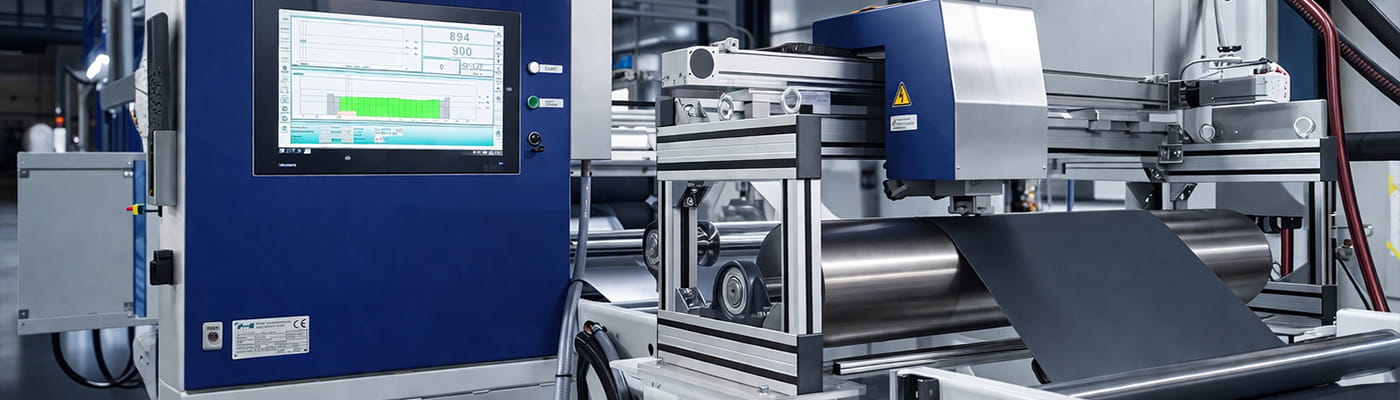
Send us the material, measurement range, and installation details—we’ll get back to you with a clear recommendation.
This depends primarily on material properties, measurement range, process conditions, and installation conditions. FOLITEC designs the measurement principle, sensor technology, and mechanics specifically for each application to ensure that the measured values remain stable during everyday production.
Not “better,” but appropriate. Contact-based methods are often robust and cost-effective when material handling is stable. Non-contact methods are useful when contact affects the material or the surface is sticky, wet, textured, very thin, or visually sensitive.
Yes. Many measurement systems can be integrated into existing lines as a retrofit. Depending on the system, interfaces to the PLC/S7, visualization, and data provision/data acquisition are possible (e.g., OPC UA, depending on the model).
For an initial technical assessment, the following are usually sufficient:
Photos, sketches, or a data sheet may be helpful.
Depending on the system family, thickness ranges can vary from very small values in the micrometer range to much larger values. The key factor is that the measurement principle and mechanics are tailored to the application—special ranges are possible depending on the system.
Yes, there are specific system designs for this purpose (e.g., using optical micrometer/laser micrometer for very thin or transparent products). The goal is to ensure that the measurement is not affected by color, transparency, or reflection.
Yes. For such materials, single-sided non-contact measurement concepts are often used, in which the sensors and material guidance are designed to ensure measurement stability even on difficult surfaces.
Yes. For dusty or demanding environments and for stiff or thick materials, robust designs are available (e.g., sturdy frame designs). The design takes into account environmental factors, material handling, and ease of maintenance.
Depending on the system configuration, measured values are made available in the PLC. Connections to SAP, S7, and OPC-UA are possible depending on the model. Additionally, a visualization of the measured data can be provided.
Yes. Depending on the system, the plant can provide measurement data for quality documentation, analyses, and process monitoring. If necessary, data acquisition is designed to align with the customer’s process and quality logic.
FOLITEC offers a range of system families as a starting point (MPI series). The specific design—measuring principle, sensor technology, mechanics, and integration—is tailored to the customer’s needs to ensure the system operates reliably in real-world processes. If the application is uncharted territory or standard concepts are insufficient, we also develop and build completely new prototypes—from the initial test setup through to production readiness.
Yes. For demanding applications, a test setup/prototype may be useful to verify the measurement principle and stability before moving to mass production.
Yes. Depending on the scope of the project, this includes commissioning, instruction/training, support, and—if applicable—retrofitting and spare parts/maintenance.
In many applications, retrofitting or replacement is possible, depending on the material, measurement range, and installation conditions. This is evaluated during the design phase, taking into account integration and process requirements.